
Jane's Patisserie » Recipes » Best Baking Recipes » Lemon Drizzle Loaf Cake! – Back to Basics!
Lemon Drizzle Loaf Cake! – Back to Basics!

*This post may contain affiliate links. Please see my disclosure for more details!*
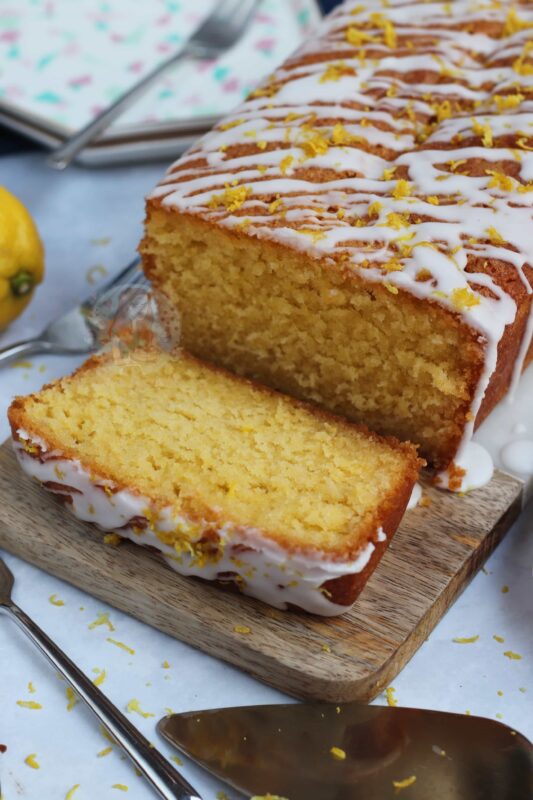
This classic lemon drizzle loaf cake features a melt-in-the-mouth lemon sponge, a deeply soaking sugar-and-juice drizzle, and a vibrant icing glaze. Prep takes 15 minutes, it bakes in 55 to 65 minutes, and it stays perfectly moist for days without dropping or sinking.

Notes from The Patisserie
Welcome to the next instalment of my “Back to Basics” series! While I have shared countless creative flavour combinations over the years, including my popular lemon and lime drizzle variant, it became clear that my readers wanted a definitive, master-class guide to the ultimate pure lemon loaf cake.
A classic lemon drizzle is a foundational pillar of British baking, loved for its signature sweet-yet-sharp punch. This foolproof recipe is uncomplicated, highly reliable, and guaranteed to become your new go to afternoon treat.

Ingredients notes and tips
This sponge is built upon the traditional equal-weight structure where the fat, sugar, flour, and eggs balance each other perfectly:
- Butter – 250g of unsalted butter
- Sugar – an equal weight of caster sugar as it will provide that soft texture
- Flour – self raising flour creates the rise required to fill the loaf tin
- Eggs – I use medium eggs, more on that below
- Lemon zest – I use the zest of two lemons but you could use 2tsp lemon extract
Because domestic egg sizes vary considerably, the most accurate way to guarantee a flawless rise is to weigh your eggs in their shells first, then match that exact weight in butter, caster sugar, and self-raising flour. As a general rule of thumb:
- Medium eggs: 5 medium eggs weigh approximately 250g, which aligns perfectly with the standard quantities listed in the recipe card below.
- Large eggs: If you only have large eggs in your fridge, 4 large eggs usually weigh around 240g. If using large eggs, adjust your butter, sugar, and flour down to 240g each to keep the chemical balance perfect.

Selecting and lining your loaf tin
So… when you are starting with a loaf cake, you need the right tin. Loaf tins can vary greatly in size, even if they are described as being the same tin. For example, I have three different 2lb loaf tins, but they are all slightly different in how much water they can hold. Usually, this is okay as long as they are similar enough! For reference, this is the 2lb loaf tin that I use! If it helps, the exact measurements are – 24.4 x 14.4 x 6.9 cm. This may help you if your’s varies slightly!
Some loaf tins are still 2lb, but they are slightly wider and shallower, which means the bake time can vary – but baking a loaf cake is quite similar to baking a Bundt Cake. They can vary dependent on tin, just like a Bundt Cake, but usually they work out the same!
When I line the tin, I usually grease it slightly and then add parchment paper on top. I don’t then grease on top of the paper. I don’t feel the need, and if you use the correct type of baking parchment, then you definitely don’t need to do it!

Maximising the zing of lemon
To get that spectacular, mouth-puckering contrast of sweet and sharp, this recipe treats the drizzle and the decoration as two entirely separate elements:
The decorative glaze: Once the cake has cooled completely to room temperature, a separate thick mixture of icing sugar and lemon juice is drizzled across the top. This provides a sharp, visually striking white finish that prevents the cake from looking plain.
The soaking drizzle: This is a simple, cloudy syrup made from fresh lemon juice and caster sugar. It must be spooned generously over the cake while the sponge is fresh out of the oven and still piping hot. The heat opens the pores of the cake, allowing the liquid to completely saturate the crumb, locking in moisture and creating a gorgeous, crunchy sugar crust as it cools.

FAQs
Can I use plain flour if I don’t have self-raising flour?
Yes, you can make your own substitute easily. For this specific recipe, weigh out 245g of standard plain flour and thoroughly sift it together with 3 level teaspoons of baking powder before mixing it into your batter.
Why did my loaf cake split down the middle while baking?
A distinct, central crack is actually the hallmark of a traditional British loaf cake! Because the outer edges of the batter set first in the narrow tin, the expanding gases inside the cake force their way up through the weakest, wettest point in the centre as it continues to rise. It is completely normal and looks beautifully rustic.
Can I scale this recipe down for a smaller 1lb loaf tin?
Absolutely. To adapt this for a smaller 1lb tin, simply reduce the ingredients down by a two-egg ratio: use 3 medium eggs and scale the butter, caster sugar, and self-raising flour down to 150g each. This smaller volume will bake much faster, so start checking it around the 35 to 40-minute mark.
Why did all the lemon drizzle sink to the very bottom of my tin?
This happens if you poke deep holes into the cake with a skewer before pouring the drizzle over it. While many recipes advise doing this, it creates direct channels that allow the liquid to bypass the crumb entirely and pool at the bottom, making the base soggy. Simply spoon the drizzle directly onto the intact, hot surface; the hot sponge will naturally draw it in like a sponge.

Lemon Drizzle Loaf Cake Recipe
An easy lemon drizzle loaf cake – lemon sponge, lemon drizzle, lemon icing… what more could you want?!
Print
Pin
Rate
Servings: 12 Slices
Ingredients
For the Cake
- 250 g unsalted butter
- 250 g caster sugar
- 250 g self raising flour
- 5 medium eggs
- Zest of 2 lemons (2tsp lemon extract)
Drizzle
- 75 ml lemon juice
- 75 g caster sugar
Decoration
- 50 g icing sugar
- 1-2 tsps lemon juice
- lemon zest
Instructions
- Preheat your oven to 180ºc / 160ºc Fan – grease and line your 2lb loaf tin!
- Beat together your butter and sugar together until light and creamy!
- Add in your flour, eggs and lemon and beat again until combined. It'll be a smooth cake mixture!
- Add the mix into the cake tin and bake. This can take 55-65 minutes – but check from 50 minutes onwards.
- Towards the end of baking – in a bowl, mix together your 75ml lemon juice and 75g caster sugar together.
- Once the cake is baked, drizzle this over the cake, whilst still in the tin. Let the cake cool fully.
- Once the cake is cooled, remove from the tin.
- If you want to decorate, mix in lemon juice to your icing sugar until you reach the desired consistency.
- Drizzle this over the cake, and sprinkle on some lemon zest for decoration!
Notes
- I use this loaf tin
- If it helps, I also use this baking parchment in my bakes
- This cake will last for 4-5 days at room temp! I store it in a cake storage tin.
Storage and freezing
Thanks to the wonderful moisture-retaining properties of the hot sugar-and-juice soak, this classic lemon drizzle loaf cake keeps exceptionally well and will stay beautifully soft, tender, and intensely flavourful for four to five days when stored at room temperature inside an airtight cake tin or a dedicated cake storage box.
It is highly recommended that you do not store this bake in the fridge, as the cold environment will cause the butter fats within the sponge to firm up, making the overall texture feel dense and dry. If you want to prepare this bake well in advance, the un-iced loaf cake freezes beautifully for up to three months; simply let the drizzle-soaked cake cool completely, wrap it tightly in a double layer of cling film followed by a layer of kitchen foil, and freeze, ensuring you allow it to defrost fully at room temperature before adding the fresh icing glaze.
Related recipes
Everybody knows I love a lemony bake, lemon drizzle loaf cake is just the beginning of the possibilities, there are lemon drizzle cupcakes if you need smaller, more bite-sized bakes, alternatively I have had great success with lemon drizzle traybake which have proven to be very popular.
The ultimate showstopper if it’s a special occasion and you need to demonstrate you are the expert baker I always have the lemon celebration cake, great for a birthday or anniversary.
Hi Jane, I can’t wait to make this lemon drizzle cake, I would like to use a mini loaf tin, would you know the cooking timing please?
I’m not sure I am afraid, sorry!
I’ve made mini ones and it takes about 20 mins! I started watching closely at 18!
Is there any way to make sure the cake doesn’t done on top?
Loaf cakes naturally do dome and split and that’s part of the charm – but you can lower the temp and bake for longer if you prefer as that can reduce it!
Hi Jane – I’ve made this one and the white choco and raspberry loaf, and both turned out perfect and were Devine! Thanks so much for the recipes! Have you made an orange version of this before and if so, is it just the same quantities of zest/juice? A family member has requested it, but I doubt it will beat the lemon one. Thank you again 🙂
Ahh yay! And yes – I would just use the same! But obviously oranges are larger so for one large orange I say is the same as 2 lemons x
Would you normally prick the cake before drizzling or is this not necessary? And is it done straight after removing from oven?
I don’t usually anymore as it can look a bit naff I find, but yes straight after the baking basically!
Absolutely amazing recipe, if you are thinking of making it…..make it! You will not be disappointed. Thank you from a very happy family!
Hi Jane!
My 2lb loaf tin is 21cm x 11.5cm x 6cm how would I alter this to fit my tin?? Thanks! x
I’m not 100% I am afraid, but best bet is to only fill the tin 2/3 of the way, and bake cupcakes with any spare mix!
Wish I’d read your question before I made my cake! My tin is the same size as yours and the excess mixture is currently plopping all over the oven 🤦🏼♀️😂
Have you ever used lemon curd for a lemon loaf? Quite like using it in cupcakes and was wondering how you would adjust your recipe to accommodate the curd?
Also made your cream cheese icing today. Was great. Added some lemon curd into that also and used it to top the loaf.
I have never mixed it into the raw sponge in a loaf cake, but it works well added on top, or even in the middle of the sponge after baking!
Too much egg for me, 200g should be about right if you dont like an eggy taste.
It may be that you did use too much egg if the eggs were too large – this is based on the equal ratio style recipes so it’s correct as listed if that makes sense!
I love lemon, but love lime more. Do you think substitute lime would work? Thank you, you’re recipes are amazing xxx
Yes it would work well! x
Hi Jane which zester do you use?
I use the fine grater when doing lemon!
This is a superb recipe. Can I ask you if it is suitable for converting to 9 inch round cake. I have been asked to make it for my nephew’s wedding.
Thank you, Anna
is there any way to prevent the cake from doming?
In my opinion loaf cakes should dome slightly and thats a part of it all – but you can try a lower temp for longer if you hate it.